By Textiles for SDGs
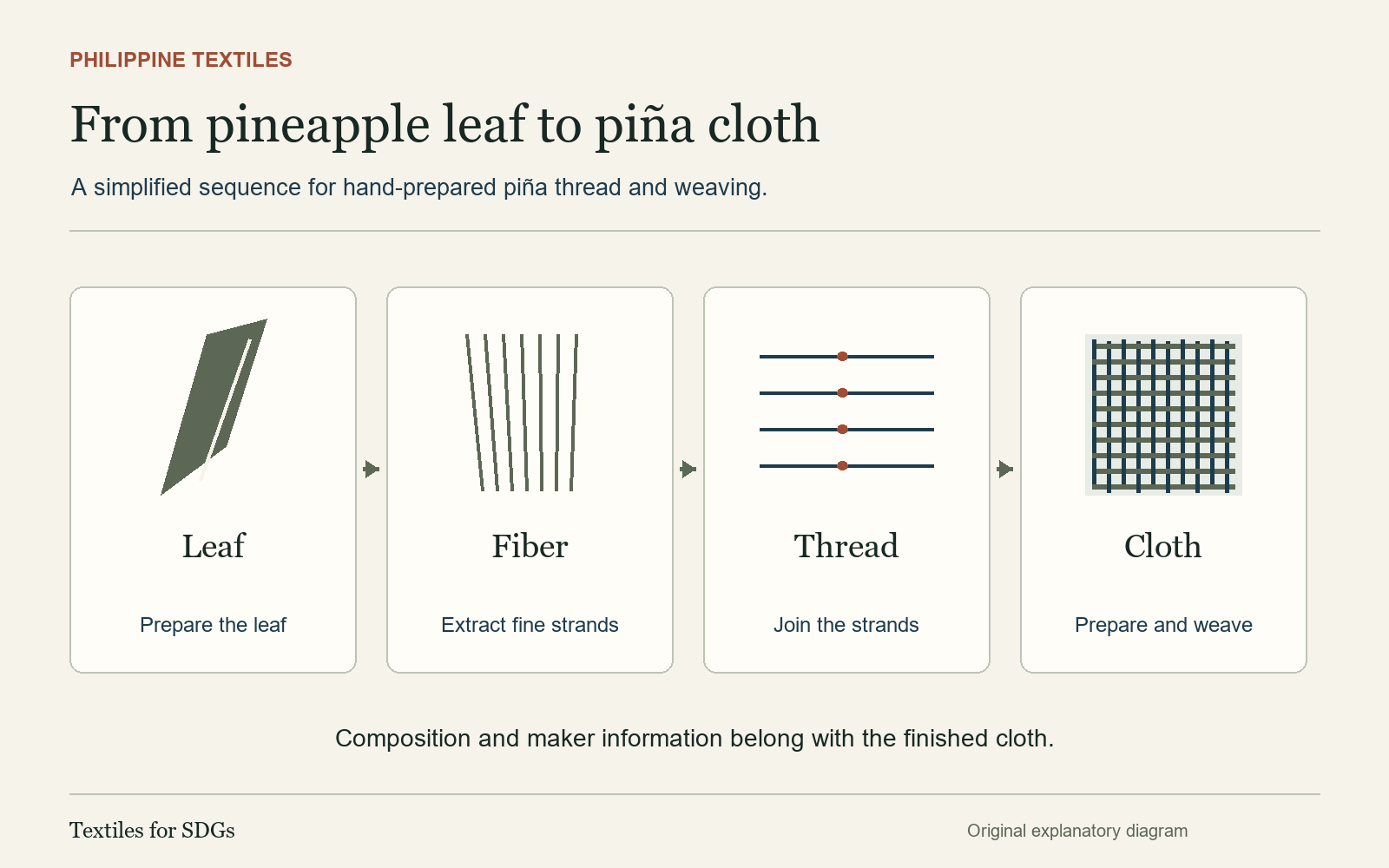
Piña cloth is woven from pineapple leaf fiber. The Aklan handloom tradition involves much more than extracting that fiber: people prepare fine strands, join them into usable thread, set the loom and weave. A sheer shirt described as “piña style” may look similar without containing pineapple fiber. To understand a particular textile, ask about its fiber content, the people and place behind its making, and the evidence for any claim about work or environmental impact.
What piña cloth means
Piña names a textile material derived from pineapple leaves, as well as cloth made from that material. It does not name every fabric with a pineapple print or every product made from discarded pineapple leaves. The National Museum of the Philippines distinguishes hand-scraped fiber from machine-decorticated fiber. That distinction matters before anyone calls a finished item Aklan handloom piña.
Keep the fiber, the cloth and the garment separate. A barong Tagalog can be made from piña, but the garment name does not identify its fiber. Embroidery may decorate piña cloth, yet embroidery is another stage of work rather than a test of what was woven underneath.
Why Aklan matters
UNESCO’s 2023 account identifies Aklan piña handloom weaving as a Philippine living-heritage practice. It describes hand extraction of fiber from the pinya Bisaya pineapple and skills passed primarily within families. The Philippine National Museum confirms the 2023 inscription on UNESCO’s Representative List of the Intangible Cultural Heritage of Humanity.
The inscription recognizes a named practice and its bearers; it is not a certificate attached to every pineapple-fiber product. The National Museum also records hand-scraping in Palawan and identifies Aklan as a center of piña fiber production. A useful description therefore names the actual place and workshop instead of assuming that all Philippine piña followed one route.
From leaf to fine fiber
The National Museum identifies bastos as coarse fiber and liniwan as fine fiber. In its account, hand-scraping separates these fractions, while a decorticating machine mixes them. These terms describe the museum’s documented Philippine materials; a seller should still explain which fiber a specific cloth uses.
In the SFO Museum’s 2022 exhibition, a leaf is stripped of its thorny edges and scraped to remove pulp. The coarse fibers come away first. Further scraping releases the finer strands used for piña cloth. They are washed, dried and sorted to remove damaged pieces. Growing the plant, harvesting and scraping are distinct jobs, even if a household or enterprise connects them.
This sequence also explains why a description of “pineapple waste” needs checking. The SFO exhibition describes plants grown for fiber, with cultivation decisions intended to favor the leaves. Other manufacturers may collect leaves as a crop by-product. Those are different feedstock stories with different production boundaries.
From fine fiber to woven cloth
Fine pineapple strands must become continuous thread before weaving. The SFO Museum records individual fibers knotted together by hand, then wound and prepared as warp for a handloom. A person preparing thread may be different from the person weaving. Joining the strands produces thread long enough to wind and weave. It also adds labor that a label saying only “handwoven” may conceal.
Once the warp is set, the weaver passes weft through it to make cloth. Plain, striped or checked structures are possible; decoration can follow later. Embroidery, pulled-thread work and appliqué should be attributed separately when present. A finished shirt can therefore embody farming, extraction, thread joining, loom setup, weaving, cutting and needlework. No single step establishes the hours or pay across the whole item.
Where piña appears in dress and collections
Historic objects show actual uses more clearly than a timeless “national costume” description. The SFO Museum’s exhibition identifies a María Clara sleeve from the mid-nineteenth century as embroidered plain-weave piña, and a pañuelo from the late nineteenth or early twentieth century as piña with sombrado appliqué. Its gallery also records a circa-1900 christening dress and cap made from piña. These are collection examples with dates and construction details, not evidence that all garments of those types used the same fiber.
The exhibition describes the barong Tagalog as a formal shirt made from piña or other natural fibers. It also includes a circa-2010 piña shirt jacket designed by Anthony Cruz Legarda. Historical and contemporary examples show continuity and change in use. The object’s maker, material and date remain more informative than its outline alone.
Pure piña, piña-seda and other blends
Piña-seda means a pineapple-fiber and silk combination. The SFO Museum notes contemporary use of silk alongside piña, while the Philippine National Museum’s Western Visayas gallery identifies piña-seda weaving in Aklan and Antique. Other combinations can include cotton or abaca. A claim of “pure piña” should mean the relevant fabric contains pineapple fiber without another textile fiber; a blend needs its actual components and proportions stated.
| Description | What it may identify | What to check |
|---|---|---|
| Pure piña | Cloth woven from pineapple fiber | Fiber declaration, maker and weaving record |
| Piña-seda | Pineapple fiber combined with silk | Percentages and which yarns use each fiber |
| Other pineapple-leaf textile | Fiber or material from pineapple leaves made by another process | Extraction, yarn or sheet formation, and composition |
| Piña-style or sheer lookalike | An appearance or garment style | Whether any pineapple fiber is present |
Sheerness and texture cannot reveal a blend percentage. If composition matters for sourcing or care, request the manufacturer’s specification rather than treating a close-up photo as a fiber test.
Traditional piña and other pineapple-leaf products
The Aklan tradition recognized by UNESCO uses hand-extracted fiber and a handloom. A pineapple-leaf product can instead involve mechanical extraction, industrial yarn production or a bonded sheet. Even where the plant source matches, the material structure, work and finishing can differ. “Made from pineapple leaves” is therefore an incomplete production description.
Nor does leaf reuse alone establish lower impact. A comparison would need to include the source and allocation of the leaves, extraction, other fibers or binders, dyeing and finishing, transport, durability and end-of-life handling. The question is addressed further in our responsible production guide.
What a responsible claim needs
Fine extraction, handjoining and loom preparation help explain why an individual Aklan piña textile can be labor-intensive. Embroidery and garment construction can add further work. They do not support a universal price, hourly wage or premium for every product. To evaluate a price or a “fairly made” claim, ask which stages the price covers, who performed them, whether work was paid by time or piece, and what the maker or cooperative has actually documented.
Questions to keep with an item
- What are the fiber percentages, including warp, weft, lining and decoration where relevant?
- Where were the leaves processed, the thread joined and the cloth woven? Who can be credited for each known stage?
- What supports “handloom,” “Aklan” or a named workshop claim?
- What payment and working-condition information exists for the people doing the labor?
- What production stages are included in an environmental comparison?
- What care guidance applies to this finished item and its trims?
Our materials guide separates a fiber statement from a wider claim. SDG 8 asks about the people behind production; care and repair begins with the actual garment and its condition. Those records can make a textile description useful without asking a traditional name to prove more than it can.