By Textiles for SDGs
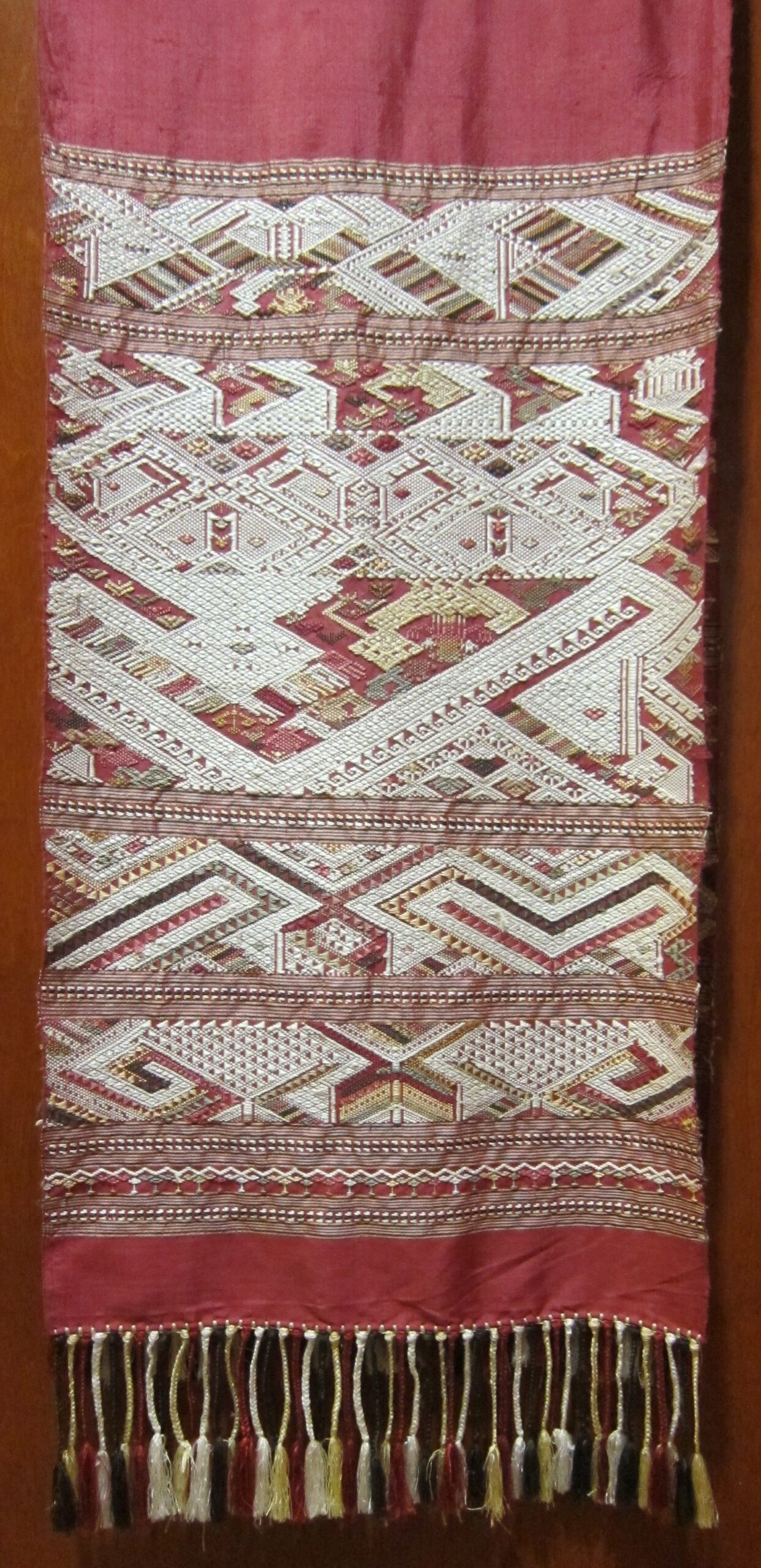
A Naga motif can tell us something about the cultural meaning of a Lao textile. It cannot, by itself, tell us its fiber content, how its maker was paid, or its environmental impact. Those are separate questions, each needing its own evidence.
The useful starting point is the practice behind the image: who wove the cloth, where the design comes from, and how knowledge is being carried forward.
A woven image with a cultural role
The Naga is a mythical serpent associated with rivers. UNESCO’s account of Naga motif weaving in Lao communities describes beliefs in Naga as protective ancestors. It records textiles used at different stages of life, including infant carrying cloths, wedding clothing and preparations for death. These are cultural meanings and practices, rather than claims that a textile provides physical protection.
The craft was inscribed on UNESCO’s Representative List of the Intangible Cultural Heritage of Humanity in 2023. Its description includes knowledge passed within families and through educational and cultural institutions. The heritage being recognized includes making and transmission, as well as the finished pattern.
This is one account of a living tradition. It should not be read as a complete description of every community, household or textile in Laos.
Separate the motif from the material
Naga names a motif. Silk and cotton name fibers. Weaving describes how threads are made into cloth. Keeping these terms separate helps avoid treating a cultural design as a material specification.
In the practice described by UNESCO, the Naga pattern is formed during handweaving on a wooden loom, rather than printed or embroidered onto finished cloth. Its account includes silk and cotton textiles. A product described simply as “Naga fabric” still needs a fiber declaration and an explanation of how that particular piece was made.
The distinction also leaves room for other textile knowledge. The Traditional Arts and Ethnology Centre’s Tai Lue cotton exhibition follows cotton varieties, preparation and spinning tools. It introduces a specific community through its production skills. That is a different scope from identifying the meaning of a Naga image, and a reminder to seek a precise community and process rather than a single national textile story.
A living practice can include new designs
Continuity does not require every new textile to reproduce an older cloth. In a September 2026 account, Ock Pop Tok describes a Naga collection developed with designer Sandrina Mimosa and handwoven by its weavers in Luang Prabang. The organization presents the collection as a contemporary interpretation for fashion accessories and home textiles.
This provides a named example of the motif entering new products. It is the producer’s description of its own work, rather than an independent assessment of the collection’s social or environmental results. A new use can be documented without assuming either that change harms a tradition or that commercial success safeguards it.
Livelihoods need evidence beyond a heritage label
Handmade, traditional and culturally significant are descriptions with different purposes. None establishes a wage level or a safe working arrangement.
TAEC’s livelihoods programme gives an example of the detail an organization can publish. It describes upfront payments, small loans, training and logistical support for handicraft producers. It also states that half of each sale through its shops goes back to producers and their families. These are TAEC’s published programme terms; they are not a payment rule for all Lao weaving, nor evidence about every Naga textile.
A meaningful assessment would ask how payments are calculated, when makers receive them, who bears the cost of unsold stock, and whether makers have a say in designs and working arrangements. Those questions connect textile heritage to decent work without replacing worker evidence with a cultural label.
Four useful checks
- Ask for the maker, community or workshop and place of production.
- Confirm the fiber content separately from the motif’s name.
- Look for an explanation of the weaving process and the design’s context.
- Trace social or environmental claims to records covering that particular supply chain.
A cultural description can make a cloth easier to understand and value. For material claims and care decisions, continue with the evidence specific to the item.