By Textiles for SDGs
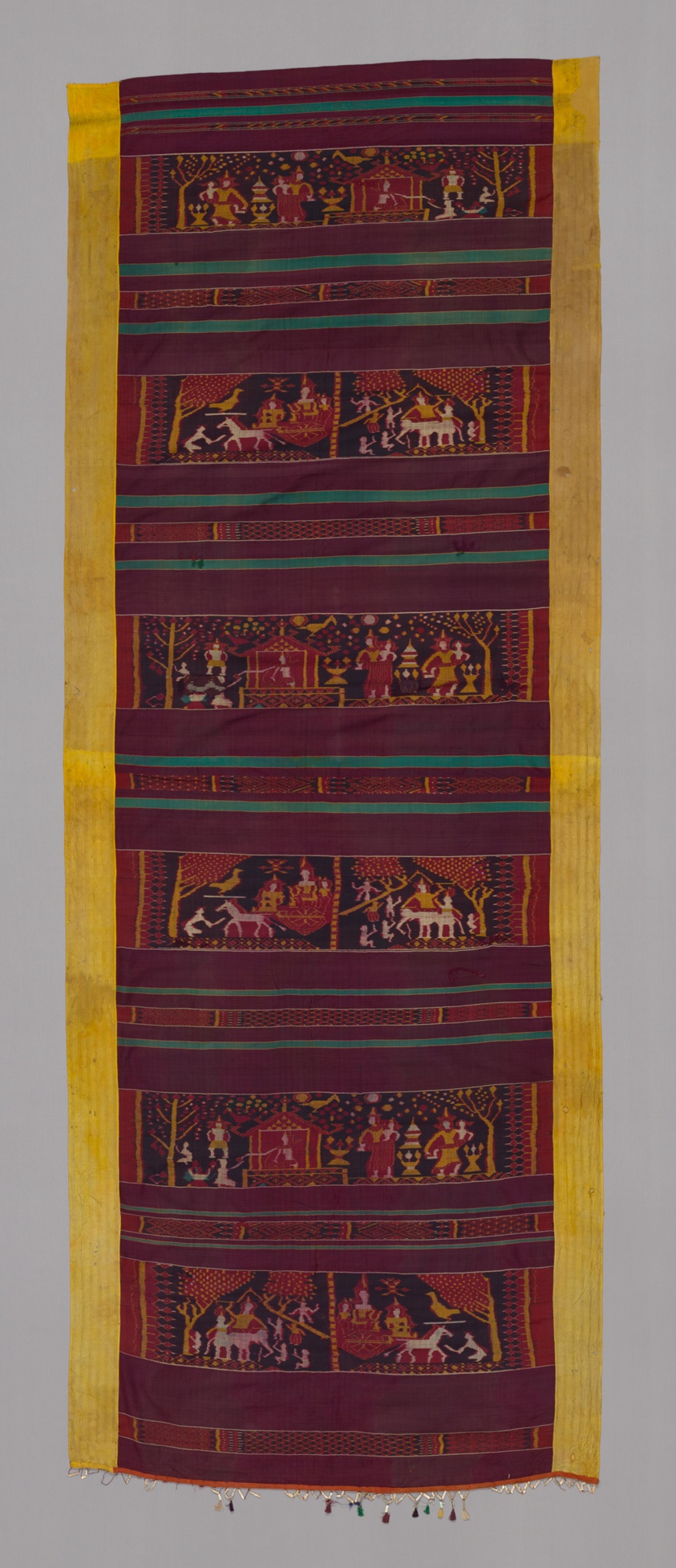
Cambodian hol brings a useful distinction into focus: a textile’s material, patterning technique and purpose are different parts of its story. Silk describes a fiber. Hol refers to ikat, in which yarn is patterned before weaving. A sampot hol is a waistcloth; a pidan may have a religious setting. Understanding those differences helps us describe the cloth accurately and ask better questions about how it is made.
A pattern planned in the yarn
In ikat, sections of yarn are bound to resist dye. Tying and dyeing can be repeated to build several colors before the yarn becomes cloth. The Ashmolean Museum’s explanation of resist-dyeing distinguishes ikat from methods that apply a resist to fabric after weaving.
Weft ikat places that patterned yarn in the threads running across the cloth. The pattern has to emerge as those threads are woven. This is a different production sequence from printing a similar-looking design onto finished fabric. A description such as “ikat print” therefore needs reading carefully: it can describe an appearance without identifying the yarn-dyeing process.
Read the object as well as the technique
The Textile Museum of Canada records an early twentieth-century Cambodian sampot hol waistcloth as silk, made using weft ikat and twill weaving. The record is useful because it identifies several things separately: where the object was made, its material, its technique and its use.
A pidan belongs to a different context. The National Gallery of Victoria holds a nineteenth-century Cambodian ceremonial hanging and covering, made in silk using weft ikat. Its account connects the cloth to temple use and Buddhist narrative, including the story of Prince Vessantara.
These examples share a technique, but their purposes are not interchangeable. A religious narrative hanging does not explain every motif on a garment. When discussing a particular textile, keep its maker’s description, documented use and collection history alongside the technical label. An attractive pattern alone is a weak basis for assigning a spiritual meaning.
Living practice, specific evidence
IKTT, the Cambodian organization founded by Kikuo Morimoto in 1996, describes its work as reviving traditional silk weaving. Its account of Khmer ikat identifies hand-spun silk, natural dyeing and traditional patterns within its own practice. It lists dye materials including lac, coconut and prohut bark.
Its Wisdom from the Forest project also describes planting mulberry trees and restoring dye plants. The organization reports that its own cultivated dye materials have become insufficient for demand, increasing outside sourcing. That detail matters: even a closely connected craft project can have a supply chain extending beyond its workshop.
This is evidence about a named organization, rather than a description of every Cambodian textile. “Woven in Cambodia” does not, by itself, establish where the silk was raised or reeled. “Natural dye” identifies a type of color source; it does not supply a complete environmental assessment.
Questions that make a claim useful
For a contemporary cloth, ask for information that can be connected to that item:
- Material: what are the warp and weft fibers, and where were they sourced?
- Process: was the pattern resist-dyed into yarn, printed onto cloth, or made another way?
- Work: who tied, dyed and wove it, and what evidence is available about payment and working conditions?
- Care: what instructions apply to this cloth’s dyes, construction and intended use?
These questions connect cultural knowledge with the concerns behind decent work and responsible consumption and production. Handwork can involve considerable skill. The label alone cannot establish fair pay, safe dyeing or lower impact. Those claims need their own evidence.
Keep the maker’s information with the cloth when passing it to another user. A recorded fiber composition, technique and care instruction is more useful than a broad description such as “traditional silk.” For an old or fragile textile, seek appropriate conservation advice before washing, altering or displaying it.
Related: reading material claims and care that fits the textile.