By Textiles for SDGs
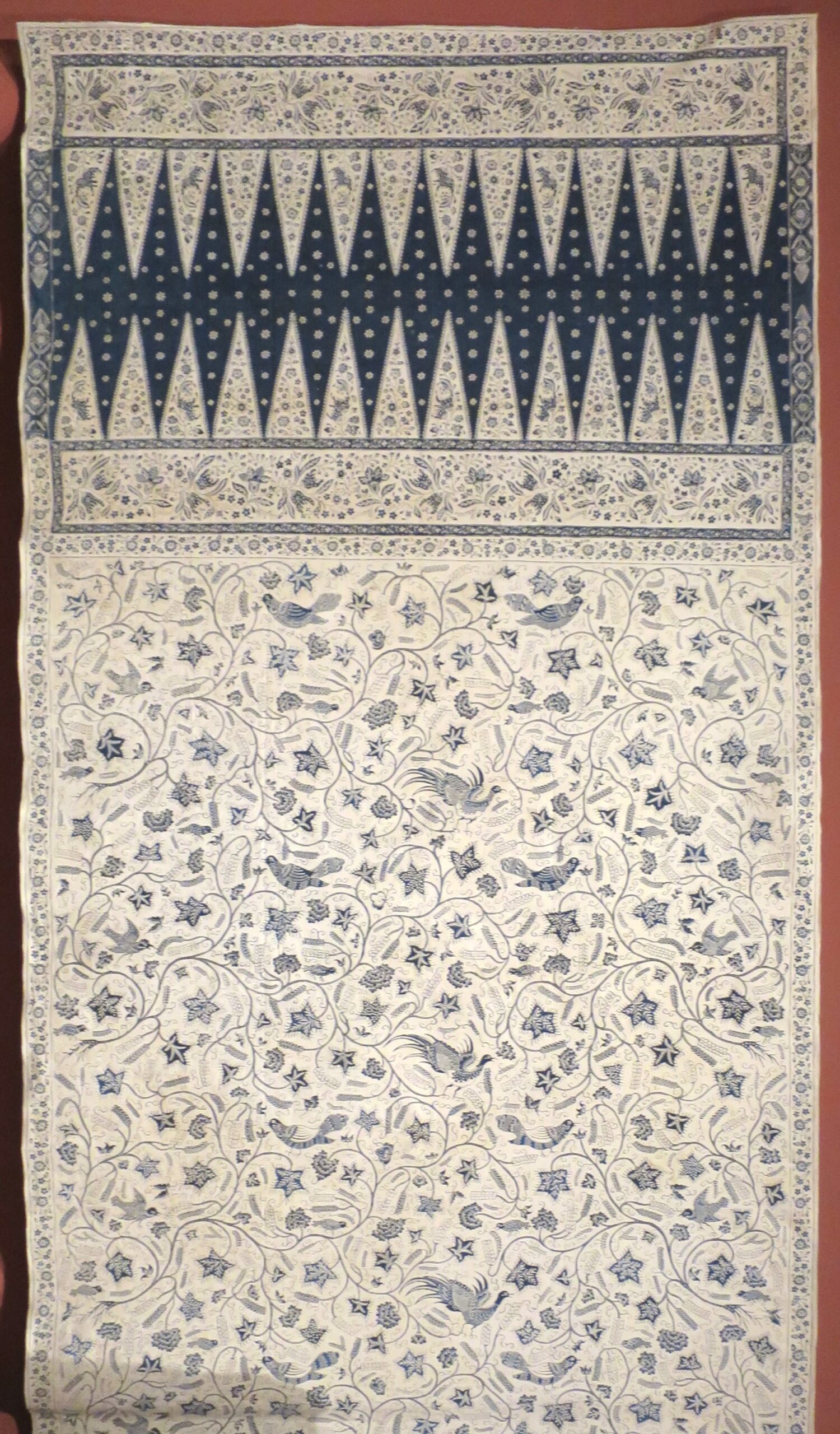
Batik describes a way of patterning cloth, rather than a fiber. A description such as “cotton batik” therefore gives two different pieces of information: what the cloth is made from, and how its design was produced. Neither tells the whole story of the finished textile.
For Indonesian batik, it is useful to separate the making process, the context of a particular design, and the evidence behind any environmental or social claim. These questions overlap, but one answer does not settle the others.
How wax-resist works
In batik, wax protects selected parts of a cloth from dye. The maker applies wax, dyes the cloth and removes the wax to reveal the protected areas. More complex designs can involve repeated stages of waxing and coloring.
Batik tulis refers to hand-drawn wax work. A tool called a canting holds molten wax in a small metal reservoir and delivers it through a spout. In batik cap, a copper stamp applies the wax in a repeating design. Makers may also combine stamped patterns with hand-drawn details. The Australian Museum’s account of the process describes both methods.
The distinction matters when reading a listing. A stamp used to apply resist wax is different from printing a batik-like image directly onto cloth. Ask which process was used. “Handmade” alone does not identify which stages were carried out by hand.
A design has a setting
Batik is sometimes presented as a single visual style. Museum objects show why that is too broad. The Metropolitan Museum of Art’s record for a Javanese open skirt cloth places its imagery within a history of cultural exchange and explains that textiles could communicate status and mark transitions in life. A motif is therefore more than a pattern to copy into a generic description.
One concrete example is a cotton sarong made in Eliza van Zuylen’s workshop in Pekalongan around 1910. The Powerhouse collection record identifies its buketan, or bouquet, design and explains the influence of European floral imagery on workshops along Java’s north coast. The cloth also has a contrasting kepala, or head panel, and a workshop signature.
This is evidence about a particular cloth and its setting. It is not a reliable basis for assigning the same meaning, maker or date to every floral batik. Where cultural significance is claimed, look for a named region, community or documented source. The RISD Museum’s historical exhibition account also describes batik as clothing with social and ritual uses, rather than decoration alone.
Keep uncertainty in the description
Even a collection record can leave a process attribution open. The Smithsonian’s record for a cotton sarong from Jakarta describes its resist method as probably cap. That qualification is useful information. Removing it would turn a considered attribution into a certainty the record does not offer.
For a contemporary purchase, photographs can help explain a seller’s description, but they do not replace process records or a maker’s account. A repeated motif, an irregular line or a patterned reverse should be a reason to ask further questions, rather than a complete authentication test.
Ask for evidence beyond the technique
A useful product description should answer several separate questions:
- Material: what is the stated fiber composition?
- Process: was wax drawn, stamped or applied using a combination of methods, or was the design printed directly?
- Origin: who made the cloth, and where did the relevant stages take place?
- Wider claims: what records support statements about dyes, working conditions, water use or waste treatment?
Do not treat “traditional,” “natural” or “artisan-made” as an environmental assessment or a wage record. Those descriptions may be meaningful, but a responsible-production claim needs evidence for the actual workshop and processes concerned. Our materials guide explains why the scope of a claim matters.
Care for the item, not the label
The word batik does not establish a washing temperature, detergent or drying method. Start with the finished item’s care instructions and its stated material. If the instructions are missing, ask the maker before washing, especially when the cloth’s age, dyes or condition are uncertain. See our care and repair guide for a practical sequence.